
Our Services
Complete Digital Growth Solutions
From strategic SEO to marketing automation, we build integrated systems that drive sustainable growth. Every service works together to maximize your online success.

Services Designed to Work Together
Each service is powerful on its own, but together they create a synergistic growth ecosystem that delivers compounding results.
Built for Lasting Visibility
SEO Strategy & Planning
Comprehensive search engine optimization that positions your brand for sustainable growth. We analyze your market, competitors, and search opportunities to build a clear roadmap that guides every decision. This includes in-depth keyword research and analysis, competitor gap analysis, content opportunity mapping, technical SEO audits, and a custom strategy roadmap tailored to your business goals.
Local SEO
Dominate local search results and connect with customers in your community. Perfect for Okanagan businesses looking to capture local market share.
Google Business Profile optimization
Local citation building
Review management strategy
Local content optimization
Geographic targeting
Strategic Backlinking
Build domain authority through high-quality, relevant backlinks. We focus on sustainable link-building that improves rankings without risking penalties.
Quality outreach campaigns
Guest posting opportunities
Digital PR and mentions
Broken link reclamation
Authority building
Technical SEO
Ensure search engines can efficiently crawl, index, and rank your website. We fix technical issues that may be holding back your performance.
Site speed optimization
Mobile-first improvements
Schema markup implementation
Crawl error resolution
Core Web Vitals optimization
Website Optimization
Ongoing improvements that enhance user experience and search performance. Your website should be a 24/7 growth engine.


UX/UI improvements
Conversion rate optimization
Landing page optimization
Keyword Tracking
Performance monitoring
On Page SEO
Form building
Website chat widget
Automated lead funnels
Our Process
How We Partner With You
A systematic approach that delivers consistent results while keeping you informed every step of the way.

1. Discovery Call
We start by understanding your business, goals, challenges, and vision. This conversation shapes everything that follows.

2. Deep Dive Audit
Comprehensive analysis of your current digital presence, competitors, and market opportunities.

3. Strategy Development
Custom roadmap designed specifically for your business goals, budget, and timeline.

4. Implementation
We execute the strategy with precision, handling technical details so you can focus on your business.

5. Monitor & Report
Continuous tracking and transparent reporting so you always know how your investment is performing.

6. Optimize & Scale
Data-driven refinements that compound your results over time, building sustainable momentum.
Who we work with
Built for small teams with big goals.
Ecommerce shops
DTC brands, Shopify stores, and Amazon sellers who need consistent, scroll-stopping visuals for product pages and ads.
Local services
Clinics, salons, gyms, and studios who want polished visuals for websites, Google Business, and paid social.
Founders & creators
Solo founders, course creators, and consultants who need a cohesive visual system for their offers and funnels.
Ready to book your Studio Package?
Share your products, timeline, and channels—we’ll confirm the best package and lock in your studio date within one business day.
No long-term contracts • Transparent pricing • You keep full usage rights.

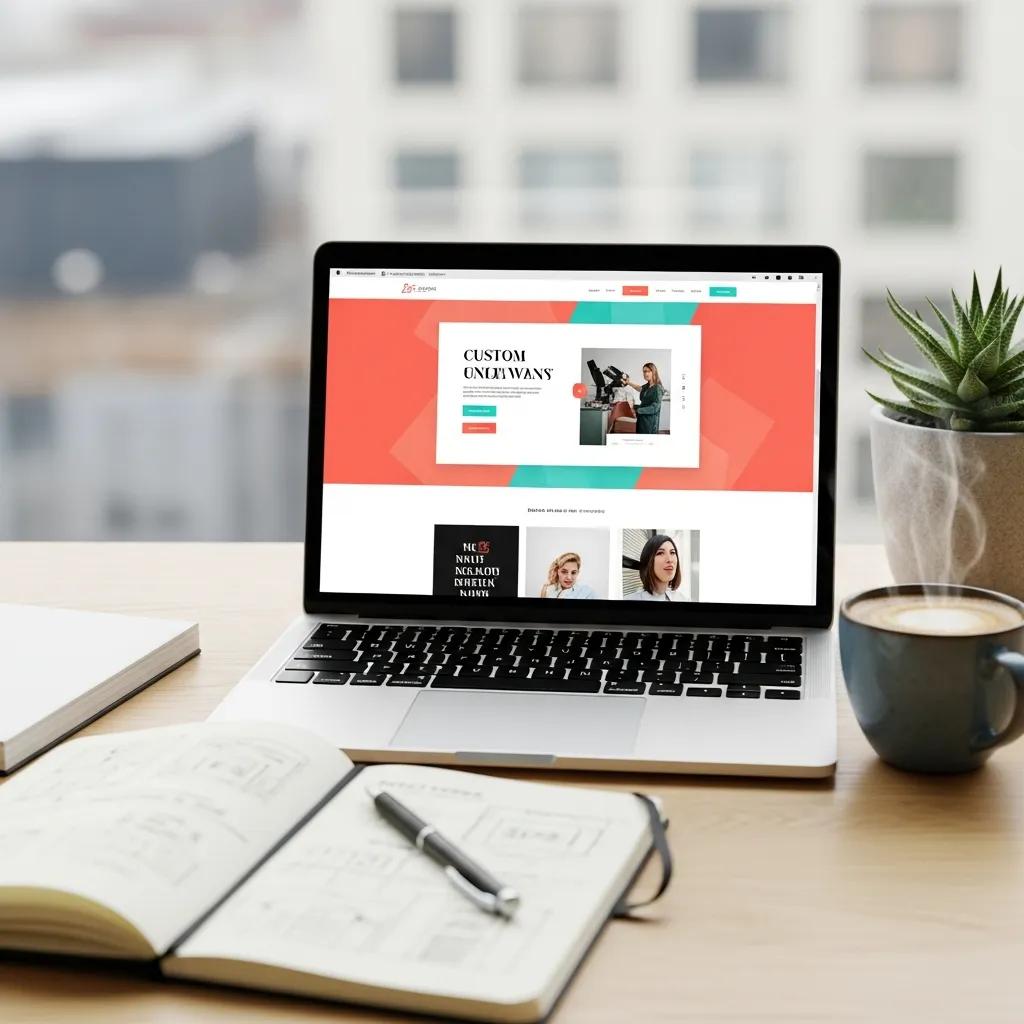
The Ultimate Guide to Custom Website Development
The Ultimate Guide to Custom Website Development: Mastering the Custom Web Development Process for Business Growth

Custom website development is the process of designing and building a website from the ground up to meet specific business goals, user needs, and technical requirements. This guide explains how bespoke web solutions drive measurable business growth by aligning design, development, and marketing strategies to improve conversions, lead generation, and brand differentiation. Many organizations struggle with one-size-fits-all templates that limit scalability, degrade performance, and blur brand identity; custom web development solves these problems with tailored architecture, unique UI/UX, and purposeful integrations. Readers will learn the full web development lifecycle, strategic elements like SEO and AI personalization, realistic timelines and cost drivers, and practical maintenance approaches that preserve value post-launch. The guide also outlines how an integrated digital studio model — combining design, development, and marketing — supports ongoing growth and conversion optimization. After defining core concepts we will walk through phases, strategic features, vendor delivery models, cost considerations, and common buyer questions to help you plan a successful custom website project.
What Is Custom Website Development and Why Is It Essential?
Custom website development is the practice of creating a website built specifically for an organization’s brand, user journeys, and technical needs rather than adapting a pre-made template. The process works by defining business goals, architecting a unique information structure and UI, and implementing bespoke front-end and back-end code so the site performs, scales, and converts. The main result is a tailored web platform that supports unique functionality, faster performance, and stronger brand identity, which together improve lead generation and customer retention. Understanding the differences and benefits of custom work sets the stage for evaluating whether bespoke development is the right investment for your business goals and growth strategy. The next subsections compare custom vs. template approaches and map direct business benefits to help you decide.
This section summarizes three primary reasons many organizations choose bespoke web solutions:
- Scalability and flexibility enable the product to evolve with business requirements rather than being constrained by template limitations.
- Brand differentiation and custom UX deliver more persuasive conversion paths tailored to target audiences.
- Technical performance and ownership improve speed, security, and maintainability compared with heavily customized templates.
These points lead naturally into a concrete comparison of custom development and template-based solutions.
How Does Custom Web Development Differ from Template-Based Solutions?
Custom development differs from template-based solutions primarily in flexibility, ownership, and long-term cost profile. A bespoke site uses custom code and architecture that fit specific integrations, data models, and performance goals, while templates provide a faster, lower-cost starting point but often require workarounds for unique requirements. Custom work reduces technical debt by designing maintainable components and giving owners full control over data and deployment, which improves security and scalability. Template solutions can be appropriate for limited budgets or simple brochure sites, but they frequently introduce constraints on UX, page speed, and future feature development. Recognizing these trade-offs helps teams choose the right path: if your roadmap includes custom integrations, unique commerce flows, or conversion-focused UX, custom development is typically the better investment. This comparison naturally leads into the business benefits that custom sites deliver.
The emphasis on scalability and performance in custom solutions is further supported by academic research, which outlines critical strategies for robust web application development.
Optimizing Scalability & Performance in Custom Web Development
Scalability and performance optimization are critical aspects of modern web application development, ensuring that applications can handle increasing user demand while maintaining optimal speed and efficiency. As businesses and users generate vast amounts of data, web applications must be designed to scale dynamically, preventing bottlenecks and service disruptions. This paper explores strategies for achieving scalability and performance optimization, including architectural patterns, caching mechanisms, database optimization, and content delivery networks (CDNs). Additionally, the role of cloud computing, containerization, and microservices in enhancing scalability is examined. By implementing best practices in web development, organizations can create high-performing applications that deliver seamless user experiences, reduce operational costs, and improve business outcomes.
Scalability and Performance Optimization in Web Application Development, AS Shethiya, 2025
What Are the Key Benefits of Custom Website Design for Businesses?

Custom website design delivers measurable business benefits through improved experience, search performance, and conversion optimization. A tailored UI/UX aligns navigation and content with buyer intent, reducing friction and increasing lead capture rates while bespoke technical choices improve Core Web Vitals and organic visibility. Custom sites also support advanced integrations—CRM, e-commerce platforms, and personalization engines—that directly feed marketing automation and revenue-generation workflows. Finally, custom development preserves ownership of intellectual property and data models, which helps teams iterate rapidly and optimize for conversion rate improvements over time. Understanding these benefits frames the practical phases teams follow during a custom build, which we will explore next.
What Are the Key Phases in the Custom Website Development Process?

The custom web development lifecycle consists of sequential phases that translate strategy into a working product: discovery and planning, design, development, testing, launch, and maintenance. Each phase has distinct deliverables and stakeholders and builds value by reducing uncertainty, validating assumptions, and delivering incremental results aligned to KPIs. Defining roles and handoffs early—who owns content, integrations, and acceptance criteria—keeps projects on schedule and preserves ROI. The following list summarizes the lifecycle at a glance and prepares you for a detailed comparison table that shows activities and outcomes for each phase.
Further research into structured methodologies for web development highlights the importance of a well-defined lifecycle to ensure project success and maintainability.
Mastering the Web Development Life Cycle for Custom Websites
This paper developments a methodology that can be used in the development of web services such as websites, web applications and eCommerce. The goal is to development a methodology that will add structure to a highly unstructured problem to assist in the development and success of web services. The new methodology proposed will be called the Web Development Life Cycle (WDLC) and adapted from existing methodologies and applied to the context of web development. This paper will outline in detail the proposed phases of the WDLC.
Web development life cycle: a new methodology for developing web applications, AM French, 2011
- Discovery and planning: Gather goals, audience insights, and technical constraints to form a project brief.
- Design and prototyping: Create wireframes and interactive prototypes that validate user flows and visual direction.
- Development and integration: Build front-end and back-end components, integrate services, and implement content models.
- Testing, launch, and handoff: Execute QA, user acceptance testing, and deploy production releases with monitoring and rollback plans.
These lifecycle steps transition into a concise phase-by-phase reference table that clarifies what happens and why it matters to the business.
| Phase | Key Activities | Outcome / Value |
|---|---|---|
| Planning & Discovery | Stakeholder workshops, KPIs, user research, sitemap | Clear scope, measurable goals, aligned timeline |
| Design & Prototyping | Wireframes, visual design, interactive prototypes | Validated UX that reduces rework and increases conversions |
| Development & Integration | Front-end, APIs, CMS setup, e-commerce | Working product with maintainable architecture and integrations |
| Testing & Launch | QA, performance tuning, accessibility checks, deployment | Stable live site with monitoring and rollback readiness |
| Post-launch Maintenance | Backups, updates, analytics, optimizations | Sustained performance, security, and improved ROI over time |
This phase map demonstrates how each step reduces risk and increases the likelihood of measurable growth, and it points to the discovery activities that set a project up for success.
How Is the Planning and Discovery Phase Conducted?
Planning and discovery is where strategy becomes a practical scope: teams define target audiences, conversion goals, technical constraints, and a prioritized feature backlog. This phase typically includes stakeholder interviews, competitive analysis, analytics review, and a technology assessment to identify CMS options (traditional or headless), third-party services, and performance targets like Core Web Vitals. Deliverables usually consist of a project brief, prioritized feature list, sitemap, and a timeline estimate that frames cost drivers. A clear discovery reduces change requests during development and creates measurable KPIs—such as lead forms, e-commerce conversion, or organic traffic—that guide design and testing. The next section outlines how those design and development outputs get executed and validated before launch.
What Happens During Design, Development, Testing, and Launch?
Design, development, testing, and launch form the execution backbone of a custom project, moving from validated prototypes to production-ready code. Design iterations refine visual language and interaction patterns into high-fidelity prototypes that developers convert into modular front-end components and back-end services. Development focuses on performance, accessibility, and integrations with tools like CMS platforms, payment gateways, and analytics. Testing includes unit, regression, cross-device, accessibility, and load testing followed by user acceptance testing to validate workflows against KPIs. A staged deployment strategy with monitoring and rollback plans ensures launches are predictable, and a documented handoff with training and operational manuals supports post-launch maintenance.
How Do Strategic Elements Enhance Custom Websites?
Strategic elements—SEO, UX, performance optimization, and AI personalization—transform a custom website from a digital brochure into a growth engine. Implemented together, these elements increase organic visibility, reduce friction in user journeys, and deliver tailored experiences that improve engagement and conversion rates. For example, technical SEO and schema support indexing and rich results, UX testing reduces friction on conversion paths, and AI personalization increases relevance by delivering dynamic content to segmented audiences. The table below maps core strategic elements to concrete implementations and measurable business benefits to help prioritize work based on expected impact.
The integration of these strategic elements aligns with broader marketing research emphasizing multi-channel approaches for maximizing digital conversion and ROI.
Multi-Channel Marketing Strategies for Digital Conversion & ROI
In an increasingly digitized and data-saturated marketplace, the integration of multi-channel marketing strategies has become essential for organizations aiming to enhance customer engagement, streamline user experiences, and improve return on investment (ROI). This systematic review examines the evolution and effectiveness of integrated digital marketing approaches by synthesizing findings from 85 peer-reviewed studies published between 2005 and 2022. It investigates how the convergence of strategic channel coordination, artificial intelligence (AI)-driven personalization, CRM and CDP infrastructure, behavioral retargeting mechanisms, and ethical data governance collectively influence digital marketing performance across industries and platforms. The review reveals that channel orchestration—defined as the coordinated deployment of marketing messages across platforms such as email, mobile applications, websites, social media, and offline touchpoints—consistently leads t
MARKETING CAPSTONE INSIGHTS: LEVERAGING MULTI-CHANNEL STRATEGIES FOR MAXIMUM DIGITAL CONVERSION AND ROI, AJ Mou, 2024
| Element | Implementation | Business Benefit |
|---|---|---|
| SEO (Technical & On-page) | Schema, page speed, mobile-first, structured content | Improved organic rankings and higher-quality traffic |
| UX/UI Design | User research, prototypes, microcopy, accessibility | Higher engagement and conversion rates |
| Performance Optimization | Image optimization, CDN, code splitting | Better Core Web Vitals and lower bounce rates |
| AI Personalization | Recommendation engines, content personalization | Increased average order value and lead quality |
These strategic mappings show where investment produces direct improvements in traffic, engagement, and conversions, which leads naturally to specific SEO and AI tactics that optimize custom sites.
What SEO Best Practices Optimize Custom Websites for Search Engines?
Optimizing a custom site for search requires a combined on-page, technical, and local approach that aligns content with searcher intent and search engine requirements. Key practices include semantic content modeling, schema markup for rich results, careful URL and site-structure design, and Core Web Vitals tuning via performance optimizations. Local businesses should also prioritize Google Business Profile management and local schema to improve discovery for nearby searchers. Implementing these tactics increases the relevance and indexability of pages, which typically results in improved organic traffic and better conversion-ready leads. Next we'll look at how AI tools complement these SEO efforts through personalization and automation.
The following checklist highlights critical SEO actions to prioritize for custom sites:
- Implement structured data: Add schema markup for content types like articles and FAQs to enable rich results.
- Optimize Core Web Vitals: Improve loading, interactivity, and visual stability to enhance user experience and rankings.
- Plan semantic site architecture: Structure content around topics and entities to improve topical authority.
Prioritizing these SEO tasks during development ensures technical debt does not undermine future ranking and conversion improvements.
How Does AI Integration Improve User Experience and Personalization?
AI enhances custom websites by automating repetitive tasks, accelerating design iterations, and delivering personalized experiences that increase engagement. Practical AI use cases include design assistants that generate component variants, recommendation engines that surface relevant products or content, and chatbots that triage leads and provide instant support. AI-assisted content personalization serves dynamic content based on user behavior or CRM data, increasing relevance and conversion probability. Integrating AI into the development lifecycle also shortens time-to-market for iterations by automating code scaffolding and testing tasks. Together, these integrations produce measurable impacts on time-to-value and customer engagement, which complement the SEO and UX strategies outlined above.
How Does TWA Studio Deliver Expert Custom Website Development Services?
TWA Studio is a digital agency that combines expert web design and custom development with integrated digital marketing to support growth and conversions. The studio emphasizes a personalized, founder-led approach; Corryn provides creative direction while cross-disciplinary teams align design, SEO, and marketing to deliver measurable lead generation outcomes. Services include custom website development, brand design, custom e-commerce solutions, social media management, Google Business Profile management, and graphic design that collectively support both acquisition and conversion strategies. This delivery model helps clients move from a discovery brief to a production-ready site while keeping growth and conversions central to every decision. For organizations evaluating vendors, this integrated approach ensures design and technical choices map directly to marketing and revenue goals.
TWA Studio’s approach centers on collaboration, measurable goals, and iterative delivery to ensure projects align with client KPIs.
What Is TWA Studio’s Unique Approach to Custom Web Design and Development?
TWA Studio’s unique approach is founder-led creative direction combined with a cross-disciplinary focus on marketing and conversion. Projects begin with discovery that aligns business goals and KPIs, then move into iterative design sprints where prototypes validate user flows and conversion points. Development follows modular, maintainable architecture standards to support future growth, while marketing inputs — SEO and content strategy — are baked into the build rather than added later. This integration reduces rework, shortens time-to-value, and keeps lead generation central to the product roadmap. Client collaboration is continuous, with regular checkpoints that translate strategic goals into concrete deliverables and measurable outcomes.
Which Client Success Stories Demonstrate Tangible ROI from Custom Solutions?
Several portfolio projects demonstrate how bespoke solutions drive lead generation and improved conversions through tailored UX and technical optimization. Typical micro-case formats show a clear challenge, a custom solution that included targeted UX changes and integration with marketing systems, and qualitative results such as increased lead quality and smoother sales handoffs. These examples illustrate how aligning development with marketing produces better pipeline outcomes and sustainable growth without relying on generic templates. Organizations seeking similar outcomes can look for case studies where strategy, design, and marketing were integrated from discovery through launch to achieve measurable improvements in lead generation and conversion.
What Are the Typical Costs and Timelines for Building a Custom Website?
Custom website costs and timelines are determined by project scope, integrations, design complexity, and required performance targets; treating a website as an investment in lead generation helps frame budgeting decisions. Projects with limited scope and pre-defined templates will require less time and cost, while e-commerce platforms, custom integrations, or headless CMS implementations increase both. Rather than fixed prices, it is helpful to understand cost drivers—design complexity, custom integrations, content production, and ongoing maintenance—and plan phasing so early wins can be delivered faster. The table below provides a concise mapping of project types to typical cost drivers and range timelines to inform realistic planning without listing vendor-specific prices.
| Project Type | Cost Drivers | Typical Range / Timeline |
|---|---|---|
| Small brochure site | Number of pages, template vs custom design | 4–8 weeks |
| Custom business site | Design complexity, custom components, integrations | 8–16 weeks |
| Custom e-commerce | Product catalog size, payment and fulfillment integrations | 12–24 weeks |
| Enterprise/headless | Microservices, API integrations, performance SLAs | 16+ weeks |
This overview clarifies how scope increases both effort and calendar time, allowing teams to plan phases and prioritize high-impact features first.
How Is Custom Website Development Cost Determined?
Costs are driven by design requirements, development complexity, integrations (APIs, payment providers, CRMs), content creation, and quality assurance requirements. Design complexity multiplies front-end effort when multiple unique templates or interactive components are required, while custom back-end logic or e-commerce features increase server-side work and testing. Content production and SEO setup are often underestimated but are essential for launch readiness and initial organic traction. Maintenance and hosting choices also factor into total cost of ownership. Mapping these drivers against business value helps teams prioritize features and consider phased delivery that delivers lead-generation capabilities earlier. This cost framework leads to realistic timeline planning in the next section.
- Design and UX complexity: Custom visuals and interactions increase design and front-end engineering time.
- Custom integrations: CRM, ERP, and payment systems require engineering and testing effort.
- Content and SEO setup: Professional content and technical SEO establish a foundation for organic growth.
Understanding these contributors helps stakeholders make trade-offs between cost and impact.
What Is the Expected Timeline from Concept to Launch?
Timelines vary by project type and organization readiness; a streamlined small site can launch in roughly one to two months, while complex e-commerce or enterprise projects commonly require three to six months or more. Discovery and planning typically occupy the first 2–4 weeks to lock scope and KPIs, design is often delivered in 2–6 weeks depending on iterations, and development sprints run in parallel with ongoing testing. Launch readiness includes QA, UAT, and performance tuning which may take an additional 2–4 weeks. Dependencies such as content availability, stakeholder approvals, and third-party integrations are the most common causes of delay, so clear governance and phased releases are recommended to accelerate time-to-value while controlling risk.
What Are Common FAQs About Custom Website Development?
Potential buyers frequently ask about timeline, cost, maintenance, and how to get started; clear, direct answers reduce friction and help teams make informed decisions. Common concerns include how long a build takes, who maintains the site after launch, and how to budget for ongoing optimization and security. Providing transparent expectations around phased delivery, support options, and handoff documentation helps convert evaluators into clients while preserving project momentum. The following Q&A items address the most common operational and planning questions to help teams prepare.
How Long Does It Take to Build a Custom Website?
A typical custom website timeline ranges from 4 to 24 weeks depending on project complexity, with smaller informational sites on the shorter end and custom e-commerce or enterprise implementations on the longer end. Discovery and scope definition usually occupy the first few weeks, design and prototyping the next segment, and development plus testing the bulk of the calendar time. Common delays arise from late content delivery, integration approvals, or scope changes; planning a phased launch and defining minimum viable features can shorten time-to-value. Clear milestones and agreed acceptance criteria are the best safeguards against timeline drift.
How Can Businesses Maintain and Update Their Custom Websites Post-Launch?
Post-launch maintenance requires a combination of routine technical tasks and ongoing content and optimization activities to preserve performance and relevance. Routine tasks include applying security patches, CMS and dependency updates, backups, and monitoring uptime and performance metrics. Content and SEO refresh cycles—updating key pages, publishing new content, and reviewing analytics—drive continued traffic and lead quality. Support arrangements often include a documented SLA for response times, scheduled maintenance windows, and training for in-house teams to manage basic content updates; these practices ensure the site remains secure, fast, and aligned with evolving business goals.
- Regular backups and security updates: Ensure data integrity and patch vulnerabilities.
- Performance monitoring: Track Core Web Vitals and address regressions promptly.
- Content and SEO reviews: Refresh priority pages and review analytics to guide optimizations.
Carrying out these maintenance practices preserves the business value of a custom website and enables continuous conversion improvements.
TWA Studio local implementation checklist
For a local business, the fastest way to improve this topic is to connect strategy to execution. TWA Studio treats bespoke web design, bespoke website, bespoke website design, custom website design, custom web design, custom wordpress development, web app development services, web application development services, web development services company, web design and development services as part of one growth system instead of separate marketing tasks. The website needs clear service pages, useful internal links, fast mobile performance, schema markup, conversion tracking, and calls to action that send leads into a CRM pipeline.
For Vernon BC and Okanagan companies, that also means matching the content to real local search behaviour. Pages should mention the service area, explain who the offer is for, answer buyer questions, and support trust signals such as reviews, examples, case studies, Google Business Profile optimization, and consistent citations. Related terms to cover naturally include bespoke website development, shopify web development services, professional web design company, web design & development services, professional web development services, bespoke web development, web design, bespoke design, website design, website design agency, content strategy, custom web development, web development services, web development company, development services.
What to improve before publishing
- Clarify the main keyword and search intent in the introduction, headings, and conclusion.
- Add practical examples for Vernon, Kelowna, North Okanagan, and British Columbia service businesses where relevant.
- Use topical terms naturally in explanations, FAQs, checklists, and comparison sections rather than stuffing them into one paragraph.
- Connect SEO work to business outcomes: more qualified traffic, more form fills, better phone calls, cleaner CRM follow-up, and stronger local authority.
- Check that every important page has a next step, such as booking a strategy call, requesting an audit, or reviewing TWA Studio services.
FAQ for local business owners
How many topical terms should an article include?
Use every relevant topical term that helps the reader understand the subject, but keep the language natural. A strong article should cover the topic fully, not repeat the same phrase until it feels forced.
Why does TWA Studio connect SEO with CRM automation?
Ranking is only useful when leads are captured and followed up. CRM automation, call tracking, forms, and lead pipelines turn local SEO visibility into measurable sales conversations.
What makes this useful for Vernon BC businesses?
Local companies need more than generic marketing advice. They need pages, content, and systems that reflect Vernon, Kelowna, the Okanagan, British Columbia search behaviour, customer questions, and local proof.

Stay Ahead of the Search Curve
Your weekly dose of SEO news, digital marketing trends, and AI search updates.